
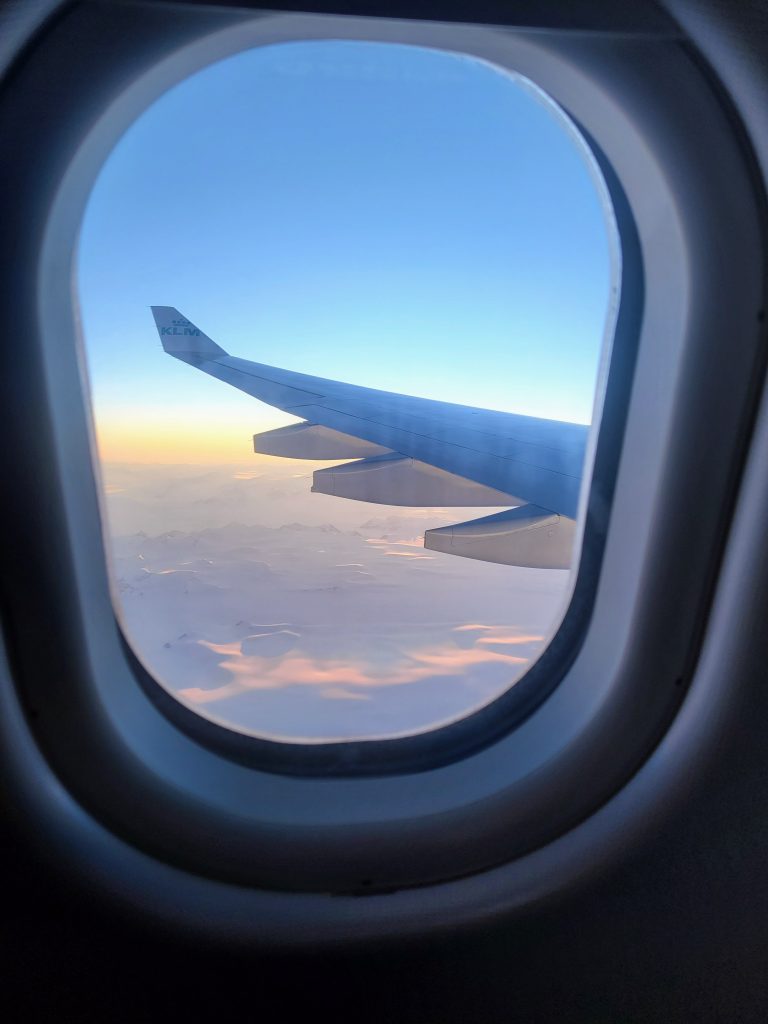
Some years ago, when I worked with a language tuition agency, I hosted a series of French air traffic controllers on full immersion English courses. English is the official language of aviation, so the French Civil Aviation Authority regularly sent controllers to the UK to refresh and maintain their spoken English skills.
It led to some fascinating discussions about vocabulary and meaning. Aviation English contains highly specialised terminology, but sometimes the challenge comes from ordinary-looking words with surprisingly complex meanings.
Take the word ‘buffet’, for example.
In aviation English, to buffet means to strike repeatedly and violently, particularly in relation to turbulence or strong winds:
‘The aircraft was buffeted by strong crosswinds.’
We can also talk about:
- a buffeting wind
- an aircraft experiencing buffeting
- fifteen degrees of flap induced marked buffet
But this meaning also exists in wider everyday English. We might talk about:
- a coastline buffeted by storms
- buffeting winds of recession
- the company survived several economic buffets
So even outside aviation, the word often suggests repeated force, instability or pressure.
With a completely different pronunciation, ‘buffet’ can also refer to food:
- a buffet lunch
- a buffet car
- a buffet supper
This version of the word entered English from French, originally referring to a sideboard or serving table. The two meanings appear to have different historical origins, despite sharing the same spelling.
Native English speakers rarely use the word ‘buffet’ in everyday conversation in the first sense, although we may encounter it in journalism, literature or weather reports. In aviation English, however, it becomes a common and highly practical term.
These overlaps between specialised and everyday English can sometimes create confusion, but they also lead to some very interesting conversations.